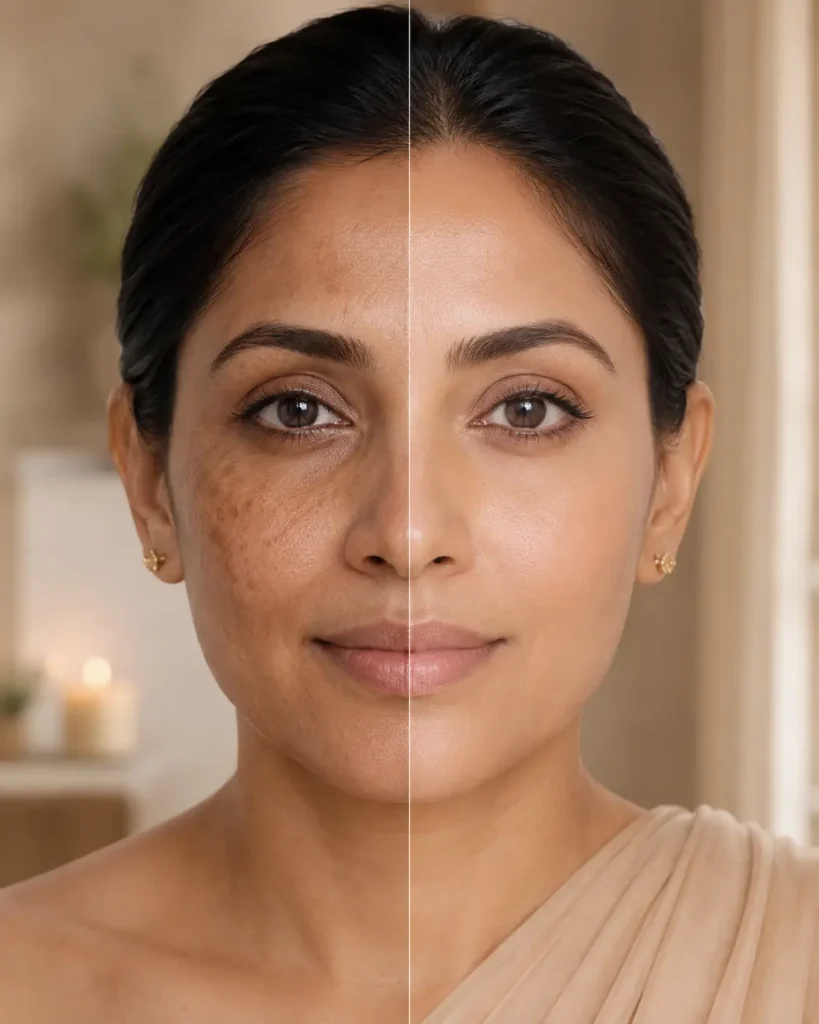
1. Melasma, a common facial pigmentation that often worsens with sun exposure, heat, and hormonal changes. Treatment starts with strict daily sun protection using SPF 30+ and good outdoor habits. Dermatologist-recommended topicals like hydroquinone, retinoids, azelaic acid, or kojic acid help reduce pigment production and gradually lighten patches. For stubborn melasma, procedures such as chemical peels, microneedling, or laser therapy may be added under medical guidance. The aim is even-toned, calmer skin — without irritation or harsh stripping.
2. Age spots and sun spots
Long-term sun exposure and gradual pigment build-up cause flat brown patches on the skin known as age spots and sun spots. The first step in treatment is to protect your skin from the sun every day with SPF 30 or higher to keep it from getting darker and getting new spots. Topical treatments like retinoids, vitamin C, azelaic acid, kojic acid, or hydroquinone that are guided by a dermatologist can help fade pigmentation over time. If you have spots that are more defined or won’t go away, you may need to have chemical peels, laser therapy, or microneedling done. The goal is skin that is more even in tone and clearer, without any patches or irritation.
3. Post-acne marks
Dark or red spots that stay on the skin after acne heals are called post-acne marks. This is especially true if the skin was inflamed or picked. The first step in treatment is to protect your skin from the sun every day with SPF 30+ because the sun can make marks last longer. Topicals like retinoids, azelaic acid, vitamin C, niacinamide, or kojic acid that a dermatologist recommends can help fade spots faster and even out skin tone. If marks are hard to get rid of or have a lot of texture, chemical peels, microneedling, or laser-based treatments may be recommended. The goal is skin that looks smoother and clearer, without irritation or rebound pigmentation.
Addressing triggers and medical causes
Pigmentation usually worsens because of repeated triggers such as hormone shifts, heat exposure, sun exposure, friction from waxing or rough scrubbing, poor sleep, and stress piling up. Managing triggers is part of treatment, not an optional extra.
Aftercare and Prevention
Pigmentation is heavily prevention-based. Your plan will usually include:
- Sunscreen daily, even indoors near windows
- Hat or umbrella for long outdoor exposure
- Avoid harsh scrubs and over-exfoliation
- Avoid direct facial heat, such as frequent steam and scorching showers
- Continue maintenance even after improvement
If your skin is reactive, calming and barrier-focused routines reduce irritation-driven flare-ups.