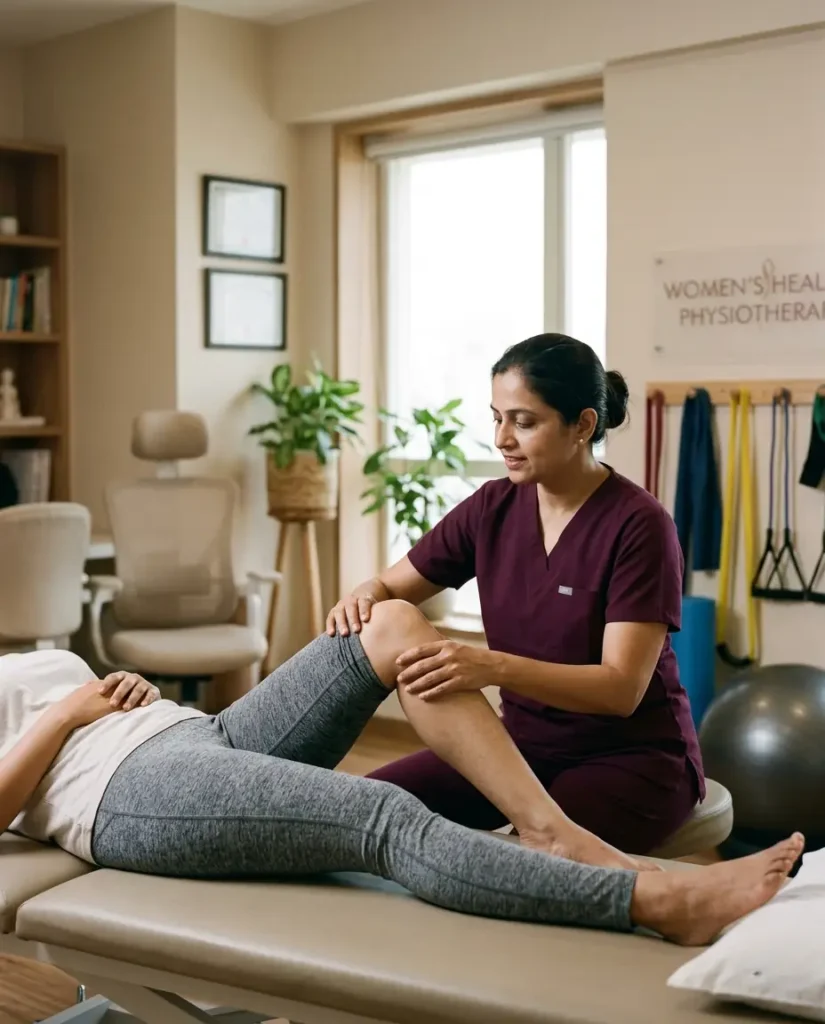
Women’s Health Physiotherapy is a specific area of physiotherapy that deals with issues that come up during pregnancy, childbirth, pelvic health, and changes in posture throughout a woman’s life. It looks at the pelvic floor, abdominal wall, spine, breathing patterns, and how well you move.
This field is different from general physiotherapy because it knows how changes in hormones, connective tissue, biomechanics, and the nervous system can affect pain, strength, and recovery.
Being a specialised physiotherapy clinic in Surat, women’s health physiotherapy at The Naari typically focuses on care during three essential stages:
Antenatal Physiotherapy (Physiotherapy before birth)
The body goes through a lot of changes during pregnancy, including changes in posture, weight distribution, ligament laxity, and muscle activation. These changes can put too much stress on some structures while making others weaker.
Common Antenatal Conditions That Are Treated Include:
- Pain in the lower back and pelvic girdle during pregnancy
- Dysfunction of the symphysis pubis (SPD)
- Discomfort in the ribs and strain on the posture
- Irritation of the sciatic nerve
- Carpal tunnel syndrome in pregnant women
- Weakness or overactivity in the pelvic floor
- Less balance and a higher chance of falling
- Changes in breathing patterns that affect endurance
The Assessment Includes:
- Analysis of posture and spinal alignment
- Checks for pelvic alignment and stability
- Checking how well the core and pelvic floor work
- Checking how you breathe
- Check your balance and how you walk
Therapies Could Include:
- Exercises that are safe to do
- hile pregnant to build strength and improve mobility
- Training the muscles in the pelvic floor
- Help with correcting posture and using things in a way that is good for your body
- Breathing exercises to help you relax and build endurance
- Teaching people how to move safely and change their activities
Natal Physiotherapy (Preparing for Labour)
Work puts a lot of strain on the body. During this phase, physiotherapy is more about getting ready than treating.
Some Of The Main Areas Covered Are:
- Strategies for moving and positioning workers
- Ways to breathe to help with pain management and control
- Exercises to help with delivery that move the pelvis
- Training for endurance and relaxation
- Knowing how to push things
Some Of The Therapies Are:
- Breathing techniques for labour
- Exercises for opening and moving the pelvis
- Relaxation with guidance and control of the muscles
- Teaching people about positions that help them feel less tired and strained
This stage helps women get ready for labour by making them more aware of their bodies, less afraid, and better prepared physically.
Postnatal Physiotherapy (Physiotherapy after giving birth)
After giving birth, the body needs structured rehabilitation.
Many problems start out small and get worse if you don’t deal with them.
Common Conditions Treated After Birth Include:
- Diastasis recti (separation of the abdomen)
- Signs of pelvic floor weakness or prolapse
- Loss of control over urination or bowel movements
- Pain in the pelvic area or lower back that won’t go away
- Tightness and weakness in the scar after a caesarean section
- Unstable core and bad trunk control
- Pain in the neck, shoulders, and upper back from taking care of a baby
- Pain in the muscles and joints that comes from being tired
Concerns About Breastfeeding That Are Talked About:
- Pain in the neck and shoulders from bad feeding posture
- Stress on the wrist and thumb
- Stiffness in the upper back from staying in feeding positions for a long time
The Assessment Includes:
- Evaluation of the abdominal wall and diastasis recti
- Testing for strength, coordination, and endurance in the pelvic floor
- Evaluation of scar mobility (post-surgical or episiotomy)
- Analysing posture and movement while doing daily tasks
- Testing for functional strength
Therapies May Consist Of:
- Rehabilitation of the pelvic floor
- Core retraining that is specific to diastasis recti
- Teaching how to correct posture and use ergonomics
- Techniques for moving scars
- Gradual strengthening to safely get back to doing things
When symptoms start to get in the way of daily life, many women look for a physiotherapy expert in Surat. Early treatment lowers the chances of long-term pain and disability.